 CARE ASSISTANT
 RO
ROThe ADL: the layer that distributes the liquid
Between the top sheet and the core, a distribution layer, the ADL, receives the void, spreads it and lets it go down. Without it, liquid piles up at the point of impact.
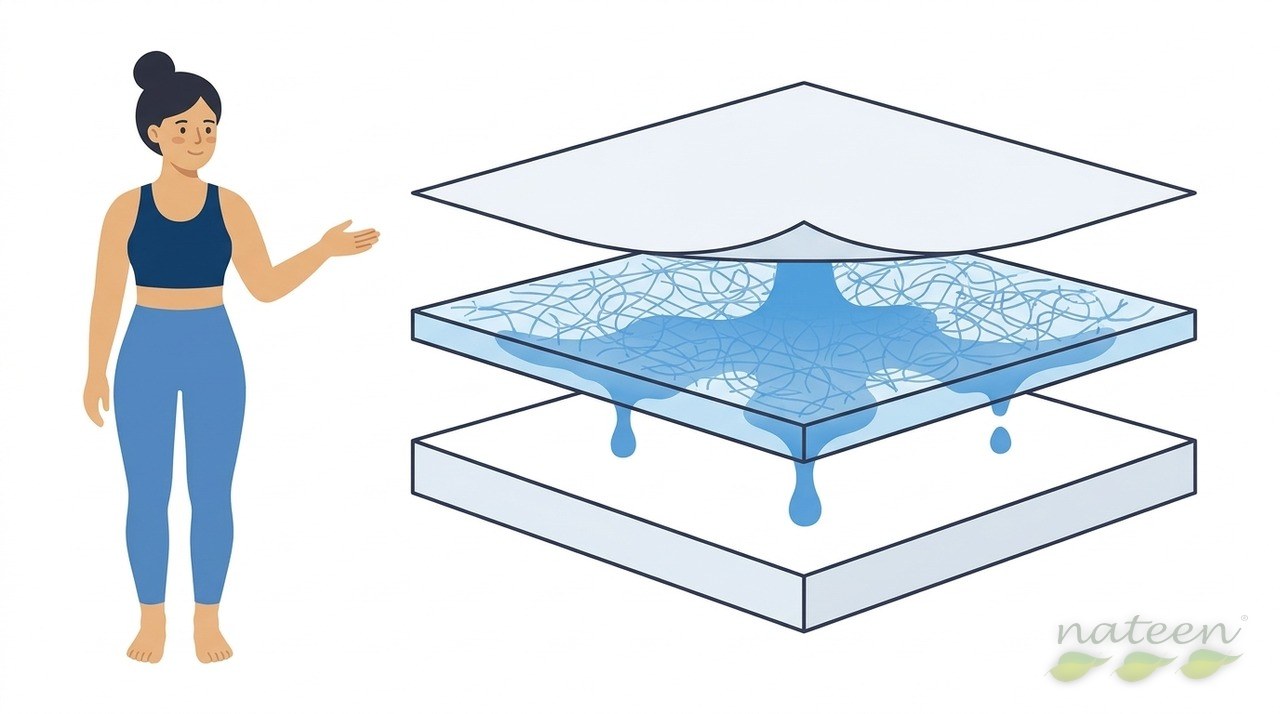
Its role
A void arrives fast and concentrated. The ADL, for acquisition and distribution layer, is a thick, very open nonwoven that absorbs it temporarily, spreads it along the core and releases it to the superabsorbent. It shortens absorption time on the second and third voids, and it keeps moisture away from the skin.
It also limits rewet: once the liquid has passed into the core, the ADL stays relatively dry at the contact.
Types of ADL
Through-air bonded ADLs are bulky and resilient: they recover their thickness after compression, which matters for someone seated. Chemically bonded ADLs are thinner and less costly. We choose the type and basis weight per range: bulkier on night and high-capacity products.
Seeing the distribution
The short animation below shows the path of the liquid: through the top sheet, spread in the ADL, then down into the core. This is the path our absorption-speed tests measure.
The ADL in motion
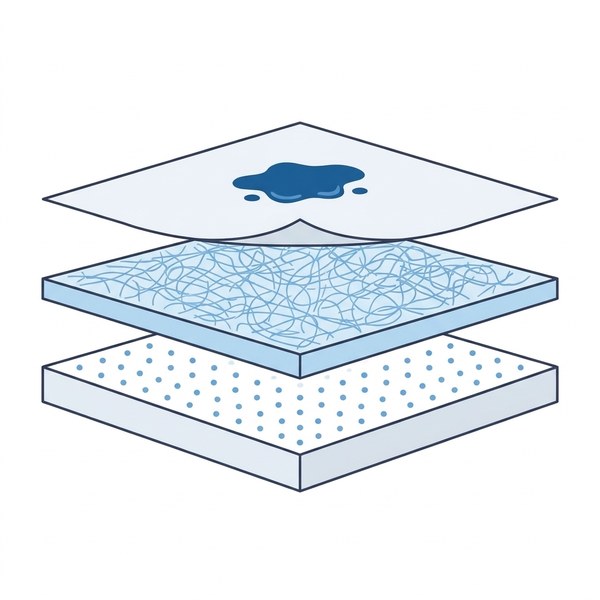
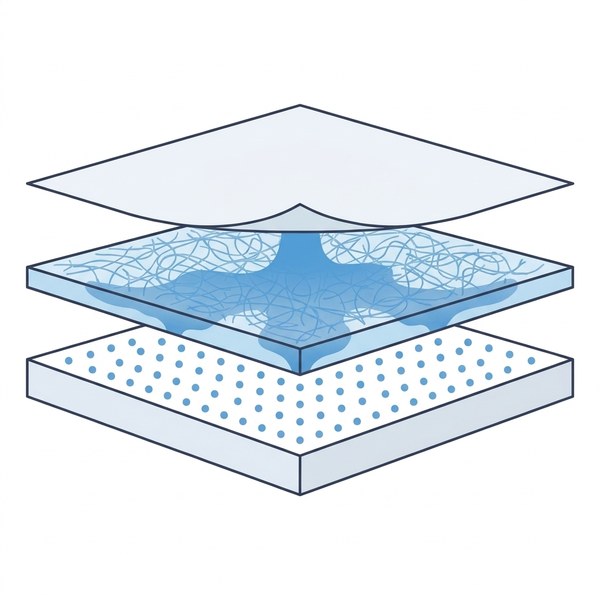
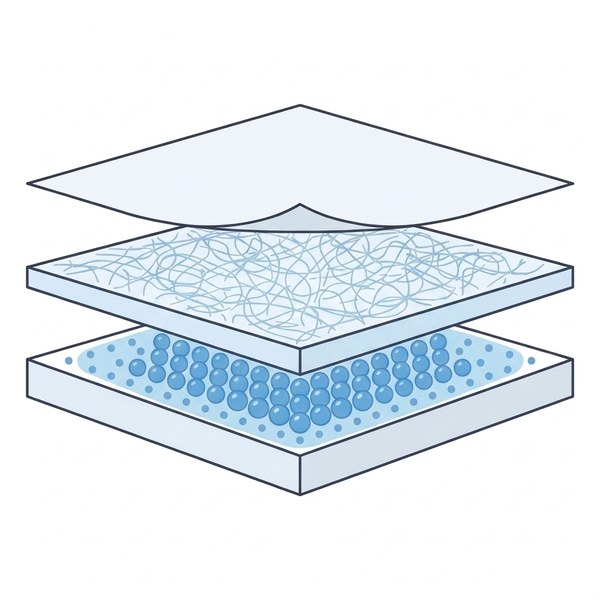 Hover to see the movement
Through-air ADL on night and high-capacity products, basis weight and width set to cover the void zone, absorption speed checked on the third void.
- The ADL spreads the liquid before the core absorbs it.
- It makes the difference on the second and third voids.
- A resilient ADL matters when seated.
These pages describe materials and test methods in general terms. The exact characteristics of each product are on its technical sheet; they evolve with our laboratory work.